Many plots in Sintra, Cascais and the hills around Lisbon are steep. To create a level garden, a driveway or space for a pool, you almost always need a retaining wall. It is also one of the elements where cutting corners is most dangerous: a wall that fails can damage your house, your neighbour's property or a public road. This guide explains what a retaining wall costs in Portugal in 2026 and what drives the price.
Retaining Wall Prices in Portugal at a Glance
Retaining walls are usually priced per m² of wall face (length × visible height). The ranges below are indicative for 2026 in the Lisbon region and exclude VAT.
| Wall type | Typical height | Indicative price per m² |
|---|---|---|
| Concrete block wall, reinforced and filled | up to 2 m | €120 – €200 |
| Reinforced concrete (cast in place) | 1 – 4 m | €220 – €400 |
| Concrete wall clad in natural stone | 1 – 3 m | €300 – €500 |
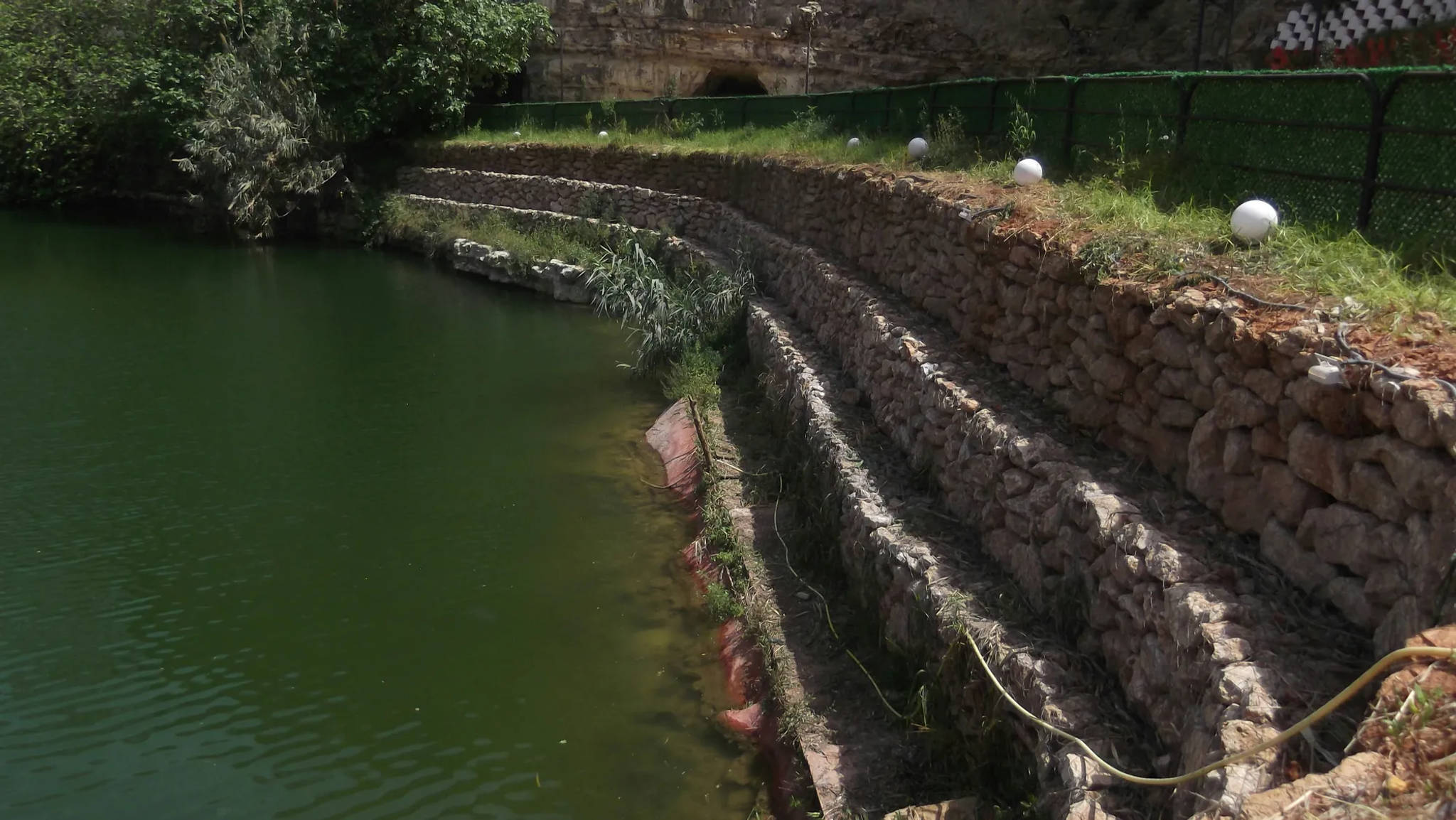
| Dry-stone or masonry stone wall | up to 1.5 m | €180 – €320 |
| Gabion wall (stone in steel baskets) | 1 – 3 m | €150 – €260 |
For a typical garden wall 15 m long and 1.8 m high (27 m²) in reinforced concrete, expect roughly €7,000 – €11,000 including excavation and drainage.
What Drives the Cost of a Retaining Wall?
- Height – cost rises faster than height. A wall twice as high must resist roughly four times the soil pressure and needs a much bigger foundation.
- Soil type – clay soils that swell in winter, common in parts of Sintra, push much harder than sand or rock.
- Load above the wall – a driveway, a house or a pool at the top increases the structural requirements.
- Access – narrow streets in historic centres may require small machinery and manual work.
- Finish – exposed concrete is cheapest; stone cladding adds €80–€150 per m².
Why Drainage Is Not Optional
The most common cause of retaining wall failure in Portugal is water, not weight. After a heavy winter rain, saturated soil can double the pressure on a wall. Every wall should include a gravel drainage layer, a geotextile membrane, a perforated drain pipe at the base and weep holes. This adds about €25–€50 per linear metre, a small price compared with rebuilding. Our article on signs your retaining wall needs repair shows what happens when drainage is missing.
Do You Need an Engineer or a Permit?
As a guideline, walls over about 1.2–1.5 m, walls that support a road, building or pool, and walls on a property boundary should be designed by a structural engineer. Engineering for a residential wall typically costs €600–€2,000.
Whether you need municipal approval depends on height, location and whether the wall changes the ground level significantly. In protected areas of Sintra and Cascais, even modest walls may need approval. See our guide to building permits in Cascais and Sintra.
Which Type of Wall Should You Choose?
Reinforced concrete is the default for tall walls and walls supporting structures. It is the most predictable in performance and can be clad in stone for a traditional look.
Block walls are economical for low and medium heights when properly reinforced and filled with concrete.
Gabions drain naturally, tolerate small movements and suit rural or contemporary gardens. They need more width at the base.
Dry-stone walls are beautiful and traditional in Sintra, but only suitable for low terraces and require skilled masons.
Example Budget: Terracing a Sloping Garden in Sintra
| Item | Estimated cost |
|---|---|
| Engineering design | €1,200 |
| Excavation and soil removal | €3,500 |
| Two reinforced concrete walls, 20 m × 1.5 m each (60 m²) | €16,800 |
| Drainage behind both walls (40 m) | €1,600 |
| Natural stone cladding (60 m²) | €6,000 |
| Total (before VAT) | €29,100 |
How Is a Retaining Wall Built? Step by Step
- Site survey and soil assessment – we check the slope, the soil type, groundwater and anything above the wall that adds load.
- Design – the engineer defines the foundation width, wall thickness, reinforcement and drainage.
- Excavation – the slope is cut back temporarily, often in sections on unstable ground so it never stands open for long.
- Foundation – a reinforced concrete footing, usually wider than the wall is high on the soil side, cast on firm ground.
- Wall construction – formwork, steel and concrete, or blocks filled with concrete, or gabion baskets filled with stone.
- Waterproofing and drainage – bituminous coating on the soil side, perforated drain at the base, gravel and geotextile behind the wall.
- Back-filling and compaction – in layers, with free-draining material, never with wet clay.
- Finishing – stone cladding, render or coping, and landscaping on top.
Each step matters. The part you cannot see after completion – the foundation and the drainage – is what decides whether the wall still stands straight in 30 years. If a contractor quotes a price far below the others, it is usually these hidden elements that have been reduced.
Retaining Walls and Your Neighbours
Many walls in Cascais and Sintra sit on or near a property boundary. Before building, agree the exact line with your neighbour, ideally with a topographic survey, and check who is responsible for any existing wall. If the wall supports the neighbour's land, both parties have an interest in doing it properly. Keeping written records of the agreement avoids disputes later.
Common Mistakes to Avoid
- Building a garden wall "by eye" without calculations because it is "only" 1.8 m high.
- Back-filling with the excavated clay instead of free-draining gravel.
- Skipping weep holes because they look untidy.
- Planting large trees right behind the wall – roots and their water demand move the soil.
Frequently Asked Questions
What is the cheapest retaining wall in Portugal?
For low walls up to about 1 m, a reinforced block wall or a gabion is usually cheapest. For taller walls, reinforced concrete is often cheaper overall because it needs less width and fewer repairs.
How long does a retaining wall last?
A well-drained reinforced concrete wall lasts 50 years or more. Poorly drained walls can show cracks and bulging within 5–10 years.
How long does construction take?
A typical 15–30 m garden wall takes two to four weeks including excavation, curing and back-filling.
Can I repair my wall instead of replacing it?
Often yes. Adding drainage, anchors or a buttress can be far cheaper than rebuilding, provided the wall is assessed early.
Need a Retaining Wall?
MS Atlantida designs and builds retaining walls together with the excavation and drainage infrastructure they depend on. Book a site visit and we will assess the slope, the soil and the best wall type for your budget.